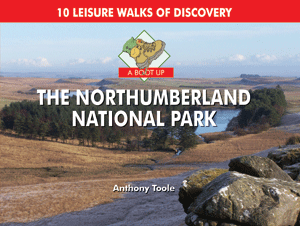
The Northumberland National Park begins near the Scottish Border and
snakes southward to the earlier border marked by Hadrian’sWall. It passes through several geological zones, each with its own landforms,
vegetation and scenery.There are the volcanic rocks of the Cheviot
Hills in the north, the fell sandstones of the heather-clad central
hills, the limestone of the carboniferous era and the dolerite of the
GreatWhin Sill, the crags of which line the southern boundary.
Rocks are carved with secret graffiti of the Stone Age, the Bronze and Iron Ages left burial mounds and hill forts, Roman roads and forts extend far to the north of Hadrian’s Wall and castles recall five centuries of border conflict that followed the Norman Conquest.
Yet the legacy of this remarkable history is one of the most stunningly beautiful regions of Britain. Most of the walks, of between 2 and 8½ miles, are suitable for families and groups of friends, and follow public rights-of-way, across high, wild and lonely moorland, where the sky is wide and the loudest sounds are the hiss of wind, the babble of water and the distant calls of skylark, lapwing and curlew.
The ten walks are:
Great Hetha; The Cheviot; Dunmoor Hill and Linhope Spout; Chew Green and Brownhart Law; Copper Snout and Usway Burn; Harbottle and the Drakestone; Darden Lough; Troughend Common; Bellcrag Flow; Broomlee Lough and the Hidden Loughs.