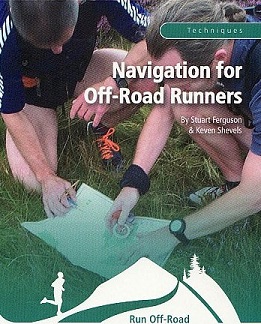
The book has been written from the perspective of the runner and in
particular for those runners who use navigation competitively within
trail running, fell and hill running and competing in such events as the
OMM, Saunders, Lowe Alpine, Highlander and Rab mountain marathons.
Written in an easy to understand manner the book begins with the
basic skills that the beginner to navigation would require such as the
nature of maps, using handrails and taking a bearing. It then moves
through the various techniques necessary to be a more experienced and
competent navigator such as rough and fine navigation and route choice.
With off-road running the ability of knowing where you are going is a
fundamental skill. Unfortunately for many runners the secrets of
navigation are akin to the secrets of the dark arts of black magic.
Specifically with the runner in mind, this book presents in an easy to
understand manner all the skills and techniques that are required for
the beginner through to the advanced user. 'Navigation for Off-Road
Runners' will give you the confidence to go further.
- Introduction
- What Do We Mean By Navigation
- Who Uses Navigation and Why
Checkpoints and Controls
- Access
- Tools
Eyes
Maps
Compass
Altimeter
GPS
Red Pen
Roamer
Pacing Scale
Pedometer
Thumb
Map Measurer
Watch
Mapping Software
- Map Reading
Types of Map
Anatomy of a Map
Map Scale
Grid Lines
Contour Lines
Concave and Convex Slopes
Line Features
Contour Features
Point Features
Symbols on Maps
Boundaries
Other Items Shown on Maps
Magnetic Variation
The Importance of Trig Points
The Problem with Maps
- Fundamental Skills
Understanding Grid Numbers
Plotting a Grid Reference onto a Map
Setting the Map
Taking a Bearing
Keeping on Course
Taking a Back-bearing
Re-orienting
Thumbing the Map
Using Features to Monitor Progress
Leapfrogging
Reading the Map While Running
Memorising the Map
- Advanced Skills
Rough and Fine Navigation
Attack Points
Estimating Slope Angle
Resection
Estimating Distance Using Pacing
Estimating Distance Using Time
Estimating Distance by Eye
Which Technique to Use for Estimating
Distance
- Techniques
Handrail Technique
Catching Features
Aiming-off
Running on the Needle
Contouring
Steve’s string
Bob’s law
Stu’s law
Using the other senses
- Route choice
The Basic Route Choice Decisions
Factors That Influence Decision Making
Foreshortening Effect
Recognising Ground and Terrain Types and How They Affect Route Decisions
Breaking a Leg Down into Sections
Gauging Stream Widths
The Effects of Weather on Route Choice
- Controls
- Navigating in Darkness and Poor Visibility
Scenarios
- Other Problems for Navigation
- Training and Exercises
Route Notes
- Summary