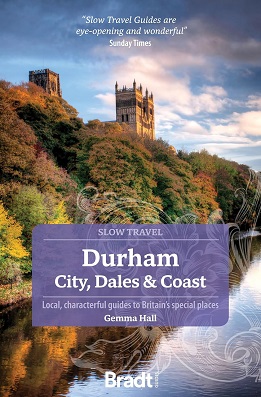
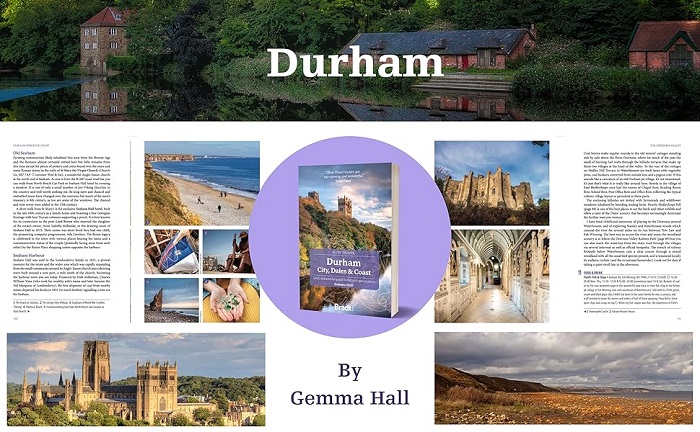
As the only comprehensive guidebook to Durham, it also
contains all the practical information you could need to enjoy time in
this diverse yet under-explored English county. Unexpected treats throng
in a region home to Tanfield Railway (the world's oldest line),
fellside Methodist chapels accessed by remote footpaths crossing silvery
burns, some of England’s most powerful waterfalls, ski runs and
arctic-alpine plants with a lineage to the last Ice Age. And even
well-known sites offer surprises: famed for its cathedral, medieval
streets, world-renowned university and 500 listed buildings, the UNESCO
World Heritage Site of Durham city also offers miles of riverside
rambles to historic gardens and the ruins of a 13th-century priory.
Durham city may be fêted by up to 4.37 million tourists a year (2019
figures), yet few visitors venture into the county's wider countryside,
with its unsung wooded valleys, old mining villages, Heritage Coast
Path, and the rugged hills and valleys of Weardale and thriving meadows
filled with rare upland wildflowers.
Key
attractions such as Castle Barnard's medieval fort and High Force
waterfall (England's biggest) are described in intimate detail - but so
too are many places that have never made it into a guide on Durham:
lesser-known museums, birdwatching sites and historical buildings. Here
too are more remote treats that need tracking down by cycling old
railway trails, or on foot, following old packhorse trails to reach
abandoned abandoned 18th- and 19th-century lead mines, secluded bathing
pools and the display grounds of the black grouse, a rare moorland bird.
Whether you are keen to experience Saxon churches
or England's industrial heritage, to wander the uplands of Upper
Teesdale or stride boldly along miles of coastline, discover Durham with
Bradt's unique Slow guide.